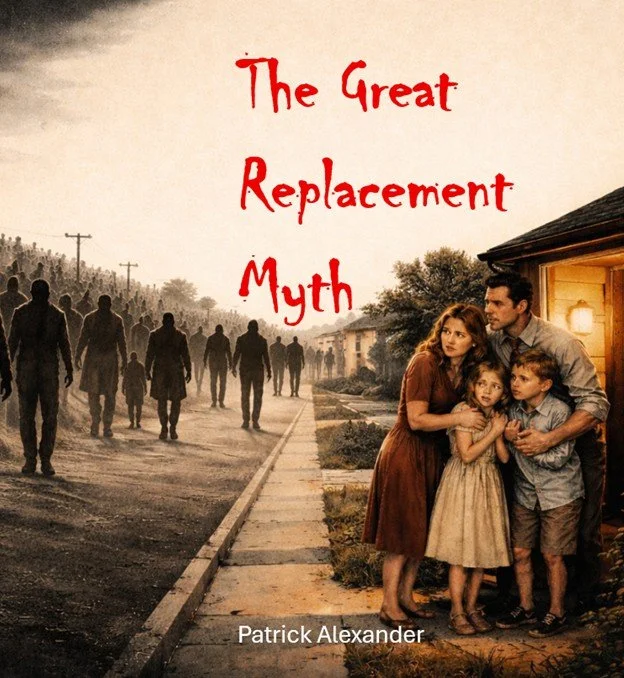
The Great Replacement Myth is a 65,000-word work of narrative nonfiction tracing one of the most disruptive political ideas of our time: the belief that Western populations are being deliberately replaced through immigration. The book traces the theory’s origins, development, and spread, showing how a fringe idea rooted in dystopian fiction and conspiracy thinking moved into mainstream political discourse in the United States and Europe.
The book begins with the modern formulation of the theory in the writings of Jean Raspail and Renaud Camus, then follows its spread through political movements, media figures, and online communities. Along the way, it shows how the language of replacement turns immigration, economic insecurity, and cultural change into evidence of a deliberate plot. That transformation is central to the theory’s power: it offers a simple explanation for complex social change, and certainty where many people feel confusion.
At the same time, the book places these fears in a much longer historical context. Migration has always shaped human history, and each generation has tended to see newcomers as a threat before eventually absorbing them into the mainstream. From ancient population movements to the Irish famine, industrial labor migration, and modern border crises, the book demonstrates that anxieties about demographic change are recurring rather than new.
A central irony of the book is that the most dramatic example of population replacement in Western history was not immigration into an established civilization, but the destruction and displacement of Indigenous peoples through European colonization. That fact complicates the modern rhetoric of replacement and reveals how selectively history is often used in political argument.
The book also takes seriously the conditions that make replacement narratives persuasive. Economic pressure, rapid cultural change, wage insecurity, and anxiety about national identity all create fertile ground for simple explanations and conspiracy thinking. Rather than dismissing those concerns, the book confronts them directly while arguing that the replacement narrative distorts real problems into dangerous myth.
Written for readers of political nonfiction, history, and current affairs, The Great Replacement Myth is a timely, accessible, and provocative examination of how fear becomes political belief — and why that belief has proved so dangerously durable and must be exposed.
Now available as:-